
Friday, March 10, 2017
CONNECT-ABILITY BEGINS
HEY! Great news. Connect-Ability is starting up again. We're looking for 5th-8th graders interested in joining us for workshops. You'll have some fun, meet new friends and learn more about disabilities. Send me an e-mail at cmchugh@nysutmail.org or call me at 518-213-6000 X6522 to learn how you can become part of this amazing inclusive project designed to help spread awareness about disability.

Wednesday, April 20, 2016
Got Attitude?
Were you ever mad or disappointed in the fact you have or have had a challenge or disability?
Sometimes I wonder why I was born with CP but I don’t let the fact that I have CP stop me. If you have a disability or challenge of any kind just because you have it does not mean you can’t do anything . You may just have to have modified work or modified equipment to use to help you in some way . If you were letting your disability or challenge bring you down it is time to change your attitude towards the fact you have a disability or challenge and accept it So if you have a challenge learn to accept it for what it is!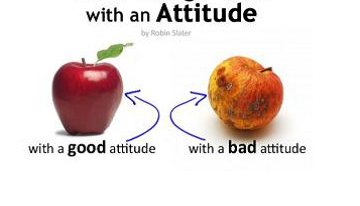
Monday, April 18, 2016
Do you have a challenge or disability? I do. I have Cerebral Palsy. Sometimes it’s hard for me to find things to
do or to go places because of the special arrangements that have to be made and
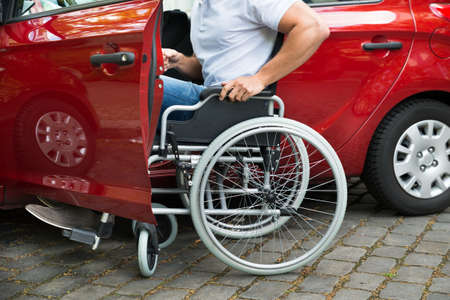
the places I want to go have to be accessible for me to get in and out of. Most places are not accessible which makes me
mad but some places are accessible. Some
of the special arrangements that have to be made for me are I take Star Bus. That is a bus service for people who are challenged
in any way. Since I can’t drive a car I
depend on people to get me to where I need to be and I do not want to do that
all the time. At some point I want to
become independent with that.
It can be very discouraging to have to depend on people to
get you where you need to go. Sometimes you
have to but its better if you try the best you can to be independent. If you need help after you’ve tried to be as
independent as you can do not be afraid to ask for the help you need
~

Tuesday, February 2, 2016
What's a GED?
I am currently out of high school but
I do not have a high school diploma. So I’m going to school with a friend to get a
GED diploma. A GED is an abbreviation for a General Equivalency Diploma which
is comparable to a high school diploma.
I am currently taking this GED class
at the FIC or Family investment Center in Schenectady, NY. I have been enrolled in this class since
September. The hours of this class are 9
AM-12:00 (noon) Monday- Friday.
The GED most recently changed its name
to currently be called the TASC Exam.
TASC is another abbreviation for a Test that Assesses Secondary (school) Completion. If you have a challenge of any sort and want
to try to study so that you have your GED and you don’t think you can, you sure
can! The most important thing you need
is the motivation!! Along with
motivation if you have a challenge another thing you may need to do is to
modify the test and make a few changes to it.
Even though you may not think you can study for the GED or go to
college, you may surprise yourself one day. So never doubt yourself and say or
think that you can’t do something just because you have a challenge!
I have CP and I am still studying for
my GED. Having a friend to go to class with me gets me thinking about studying
for the GED more. You don’t always need
a friend to go with you but it’s nice to have one.
Monday, November 9, 2015
Thanksgiving greetings
Happy Thanksgiving
We wish all of our Connect-Ability friends a happy holiday. Remember to be thankful to all of your teachers, friends, and family members who are part of your life all year long. We're thankful for everyone who comments on our blog posts.
Thursday, September 17, 2015
Luke comments on Out of My Mind
One of our newest Connect-Ability members who read Out of My Mind this summer has this to say about it:
The book is a great novel. I highly recommend it to anyone. My cousin was diagnosed with CMND (Congenital Muscular Dystrophy). I think the story was similar to the struggles he faces. He and Melody have mobility challenges along with trouble in school. I think his parents would like to read this book.
Luke


When we learn about disabilities and how they affect the people who have them and their family members we become better people, more able to advocate for one another and more capable of having a diverse group of friends to learn from. We ought to be all about learning more and using that knowledge to make our world a more inclusive place. Thanks, Luke, for your comment.


The book is a great novel. I highly recommend it to anyone. My cousin was diagnosed with CMND (Congenital Muscular Dystrophy). I think the story was similar to the struggles he faces. He and Melody have mobility challenges along with trouble in school. I think his parents would like to read this book.
Luke
When we learn about disabilities and how they affect the people who have them and their family members we become better people, more able to advocate for one another and more capable of having a diverse group of friends to learn from. We ought to be all about learning more and using that knowledge to make our world a more inclusive place. Thanks, Luke, for your comment.
Sunday, September 6, 2015
Out of My Mind - Ashley's Review
I would rate Out of My Mind, by Sharon M. Draper, five stars because it teaches people with and without disabilities to see someone for who they truly are, not merely by the type of disability they may have. This book further promotes disability awareness through instructing readers not to look down on people who have a disability, not to use the word "handicapped" or "disabled," and not to underestimate one's mental or physical capabilities. Melody embodies the fact that, just because someone has a disability does not mean that they are not smart—they can understand. This novel was fantastic, and I loved reading it. I highly recommend Out of My Mind to those who haven't read it.
-Ashley
-Ashley
Wednesday, August 19, 2015
Connect-Ability Volunteers

Theresa and I are volunteering at a lunch program for children in Schenectady. Connect-Ability members like to spread the disabilities awareness message in their communities. Our CAN DO theme applies to doing our share to help others. We want everyone to know that people with disabilities can be the helpers. -Catharine
Saturday, August 15, 2015
Review of Out of My Mind
Out of My Mind was an excellent book that realistically captured the childhood of a someone with cerebral palsy. It clearly showed the struggles Melody faced, both physically and emotionally, and how they challenged her spirit, not only her body. This book really captures and develops Melody's character and determination to live a "normal" life. That is something we could all learn from Melody—her will to live a "normal" life no matter the obstacles along the way.
Rating: 4.1 out of 5 stars.
-Albert
Friday, August 14, 2015
Out of My Mind
During Connect-Ability's summer workshop, members discussed the novel, Out of My Mind by Sharon M. Draper. This novel follows an eleven-year-old, named Melody's, struggles and triumphs. She is born with cerebral palsy that leaves her unable to walk or talk, but Melody's abilities far outshine her disabilities. Melody has a photographic memory and is extremely intelligent. Words constantly flood her thoughts, which she is physically incapable of saying, making her go out of her mind. Out of My Mind explores themes of tolerance, understanding, people-first, assistive-technology, and family and friends, and thus, Out of My Mind perfectly fit key ideas of Connect-Ability. Look out for more posts about this novel to come!
Friday, July 24, 2015
Read a good book this summer
Have you read the book Out of My Mind
yet ? My best friend Ashley and I
read this book together. The book was so
good it was hard to put down. We both
have Cerebral Palsy so the book was highly relatable. When Melody states “When people look at me I guess
they see a girl with short, dark, curly hair strapped into a pink wheelchair.”
It makes me think of how people stare at me and how they make assumptions about
me without even knowing me.
Does this
happen to you? How does it make you
feel?
I thought
this book teaches really good lessons of what to do when people treat us
differently. I recommend the book to those who haven’t read it.
Theresa

Wednesday, July 22, 2015
Theresa's back to tell you more about CP
HI, I'm Theresa and I'm back to tell you more about Cerebral Palsy.
It is estimated that some 500,000
children and adults in the United States manifest one or more of the symptoms
of cerebral palsy. Currently, about 8,000 babies and infants are
diagnosed with the condition each year. In addition, some 1,200 - 1,500
preschool age children are recognized each year to have Cerebral Palsy. Cerebral Palsy is one of the most
common physical disabilities in the world. We should all know more about it and
about the people who are living with it every day.
Cerebral Palsy is a physical disorder that can affect your voice, arms, legs,
motor skills and eating. The effects of
having Cerebral Palsy can vary from person to person. Due to physical and other
limitations people with Cerebral Palsy sometimes need accommodations.
I
have Cerebral Palsy. Some accommodations I had in school were extended
time to walk or use my wheelchair in the hallway. I also got extended time to
take tests and some of them were read to me. I have found that accommodations
made my life easier and helped me to do what others can do.
There
are many ways people can get accommodations for Cerebral Palsy. Types of
accommodations are:
Help in Performing Activities of Daily Living:
·
Provide
an accessible restroom
·
Assign
classrooms close to an accessible restroom
·
Allow
the use of personal care attendants
·
Allow
the use of a service animal
·
Schedule
classes to allow extra time for activities of daily living (ADL)
Help in Accessing Classrooms:
·
Provide
accessible parking, an accessible route of travel, and accessible
entrances/exits
·
Install
lightweight doors or automatic door openers
·
Maintain
unobstructed hallways, aisles, and means of egress
·
Provide
an accessible classroom desk or portable wheelchair desk
Help in Taking
Notes:
·
Use
a laptop computer with alternative computer input device/software
·
Use
writing and grip aids
·
Provide
a note taker
·
Provide
a copy of the instructor’s notes or outline
·
Help in Studying
and Test Taking:
·
Use
a computer software program for self-editing, word prediction, and
grammar/spell check
·
Use
an electronic organizer, post notes/reminders
·
Allow
extra time to complete homework assignments
·
Provide
a scribe
Help in Communicating
with Others:
·
Use
a communication aid with speech output
·
Add
communication software/speech synthesizer to a laptop
·
Use
a speech clarification device
:
Tuesday, July 14, 2015
Hello Connect-Ability ,
I’m working at NYSUT this summer . My first job is to get ready for the August 10th workshop. Have you read the book Out of My Mind by Sharon Draper yet? I have and I thought it was really good. I could totally relate to it. I don’t have the same type of Cerebral Palsy (CP) as Melody, the main character has. I have Spastic diplegia . It’s historically known as Little's Disease, and is a form of cerebral palsy (CP) that is a chronic neuromuscular condition of hypertonia and spasticity — manifested as an especially high and constant "tightness" or "stiffness" — in the muscles of the lower extremities of the human body, usually those of the legs, hips and pelvis.
Spastic diplegia accounts for about 22% of all diagnoses of cerebral palsy, and together with spastic quadriplegia and spastic triplegia make up the broad classification spastic cerebral palsy, which accounts for 70% of all cerebral palsy diagnoses.
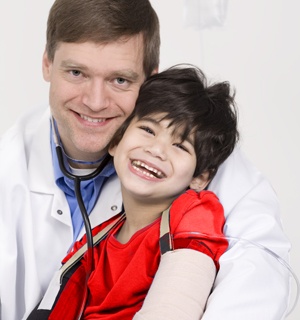
But to get back to the book we’re reading for our next writing workshop. It’s a story about a girl with CP. I could relate to Melody’s accommodations at school. I used to get extended time for test taking as well.
But I also understood how she felt when people looked at her funny and they still look at me funny sometimes. Truth be told, I don’t like that. Instead people should smile and be friendly because that’s what I do when I meet someone. I am looking forward to interesting conversations and discussions about CP at our next workshop
Theresa
Monday, April 27, 2015
Spring is here?
 Hey Connect-Ability students, Hope Spring has come to your neighborhoods. The winter was way too long. We are planning a summer time get together to focus on Sharon Draper's book, Out of My Mind. You all received a copy at our last get together in the fall. Our editor Isabel gave you a questions to think about as you read the book. The questions were connected to the Common Core Leaning Standards for English Language Arts. I'm looking forward to hearing what you thought of the book. Remember our Connect-Ability themes when you're reading and answering your question:
- Inclusion of students with disabilities
- Yes we Can attitude
- Kids with disabilities are like kids without disabilities in most ways
- Accommodations allow access
Catharine
Subscribe to:
Posts (Atom)